
The MÖNSTER Lab (MOlecular/Nano-Scale Transport & Energy Research Laboratory) studies the fundamental physics of energy and mass transport from the molecular and nano-scale using theories, simulations, data-driven approaches and experiments, and apply the knowledge toward engineering materials with tailored thermal properties, thermal management of electronics, improving efficiency of energy devices, designing molecules and system for water desalination, high-sensitivity bio-sensing and manufacturing. The lab currently focuses on developing machine learning techniques to explore materials—including polymers, crystals, and interfaces—with tailored thermal properties, developing scientific AI for multiscale thermal modeling to advance thermal management solutions for nanoelectronics and 3D heterogeneous integrated chips, and developing quantum computing algorithms for metamaterials and lattice design and optimization.
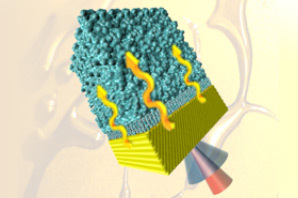
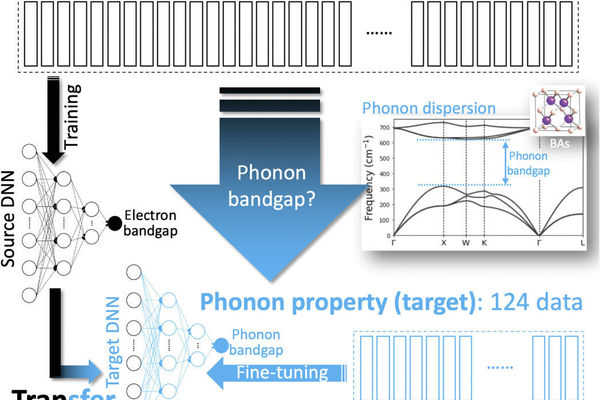
Our research in energy transport aims at understanding the fundamentals of thermal transport to improve energy efficiency and electronics performance. We leverage ML to predict and design thermal transport properties of materials and structures across multiple scales. We also develop sientific AI techniques to accelerate multiscale thermal modeling, especially phonon Boltzmann Transport Equations, to study thermal transport in nanoelectronics and 3D chips.
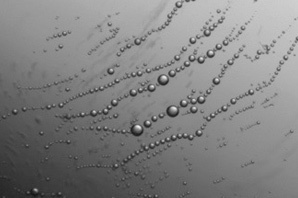
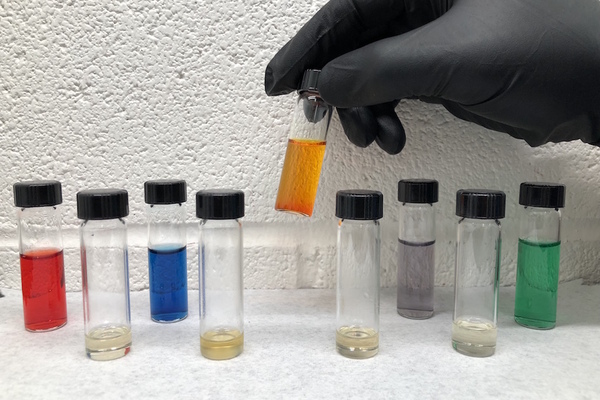
Our research in mass transport focuses on understanding the solubility of mixtures of organic solvent, water and salts for water treatment applications using directional solvent extraction. We use materials informatics techniques to explore and understand solvents that excel in desalination performance. We also study multi-scale opto-thermofluids to explore the fundamentals of bubbles for sensing.
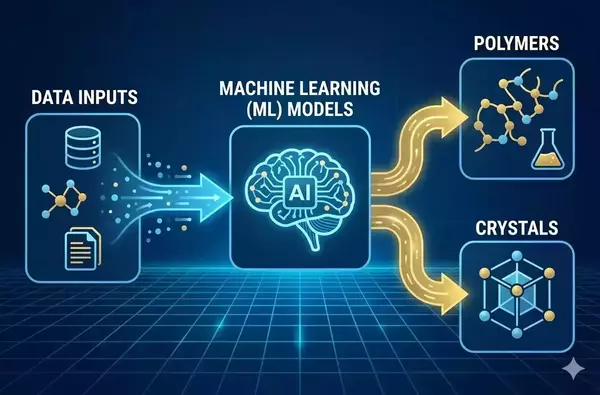
Our materials informatics research applies data-driven ML approaches to accelerate the discovery and design of polymers and lattices. By integrating molecular simulation with specialized databases, we develop predictive tools that identify promising material candidates for targeted applications, , especially for thermal applications, significantly reducing the time and cost of traditional trial-and-error experimentation.
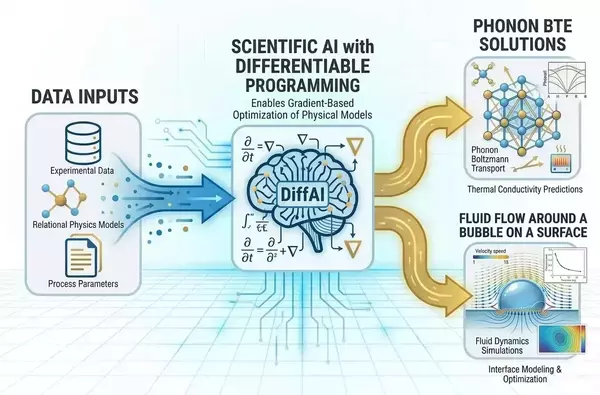
We develop and apply physcis-informed ML methods to solve complex problems in energy and mass transport. Our research leverages physics-informed neural networks (PINNs), and differentiable solvers that integrates physical governing equations and neural networks to solve multiscale heat and mass transfer problems in microelectornics and around bubbles, enabling faster and more accurate predictions of phonon and fluidic behaviors.
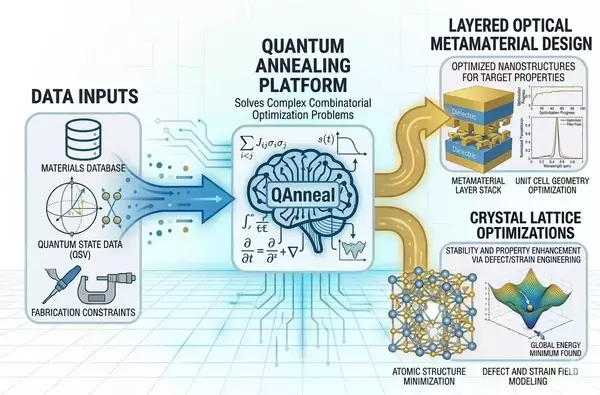
Our quantum computing research explores the use of quantum algorithms and quantum annealing techniques to tackle optimization and simulation challenges in materials science and engineering. We investigate how quantum computing can solve combinatorial problems that are intractable for classical computers, for applications like metamaterials and lattices.
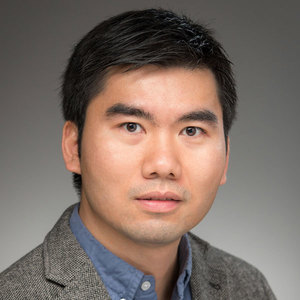
Tengfei Luo, PhD
Dorini Family Professor
Department of Aerospace and Mechanical Engineering
Department of Chemical and Biomolecular Engineering (concurrent)
Liu Institute for Asia and Asian Studies (fellow)